
How to Check an HVAC Contractor's License in Texas
In Texas, a company that installs, repairs or services heating and air conditioning for the public needs a state license. Here is how to look one up in a few minutes and what the results mean.
By the HVAC-R Finest team. Updated November 18, 2026.
Who licenses HVAC contractors in Texas?
The Texas Department of Licensing and Regulation (TDLR) licenses air conditioning and refrigeration contractors. The law is Chapter 1302 of the Texas Occupations Code, and the detailed rules are in Chapter 75 of Title 16 of the Texas Administrative Code.
State law defines air conditioning and refrigeration contracting as designing, installing, building, repairing, maintaining, servicing or modifying equipment in an environmental air conditioning system, a commercial refrigeration system, or a process cooling or heating system. If someone does that work for the public, or offers to, they need a license. The law also says a licensed plumber may not do this work without an air conditioning license.
How to use the TDLR license search, step by step
The search is free and takes only a few minutes.
Open the search page
Go to the TDLR License Data Search. It shows active licenses only, so an expired license will not appear.
Pick the license type
Choose Air Conditioning Contractors to check a contractor. Choose A/C Technicians if you want to check a technician who works under a contractor.
Search by number, name or place
The license number box takes digits only. You can also search by a person's name (last name, first name) or a business name, or narrow results by city, county or ZIP code.
Read the result
Each result shows the name, license number, expiration date, license type and address. Make sure the name matches the person or company on your quote.
Compare it with your paperwork
The number on the screen should match the number on the contractor's quote, invoice, truck and ads. If the class or endorsement is not clear, ask the contractor or TDLR.
Call TDLR if you cannot find it
Spelling and business names can trip up a search. TDLR says to call its Customer Service line at 800-803-9202 if a license is not found.
Class A vs Class B: what the class tells you
Texas issues two classes of contractor license. A Class A license covers equipment of any size or capacity. A Class B license covers equipment of not more than 25 tons of cooling capacity or 1.5 million BTUs per hour of heating output.
Most home systems are far smaller than the Class B limits, so a Class B contractor can legally handle a typical house. The class matters most on large commercial jobs, such as big rooftop units or central plants, where only a Class A license covers the full size of the equipment.
The two endorsements
Every Texas contractor license must carry one or both of two endorsements. The Environmental Air Conditioning endorsement covers systems that treat air to control temperature, humidity, cleanliness, ventilation and circulation for human comfort. That is the endorsement for home and office heating and cooling.
The Commercial Refrigeration and Process Cooling or Heating endorsement covers things like walk-in coolers, refrigerated cases and process cooling equipment. The law says a contractor may not do a type of work their license is not endorsed for. So check that the endorsement matches your job, not just that a license exists.
As an example of how this looks in practice, HVAC-R Finest's license number, TACLA00084369E (Class A, Environmental Air Conditioning endorsement), is shown in the footer of this site.
Where the license number must appear
As of 2026, TDLR rule 16 TAC 75.71 sets out where a contracting company must show its license number. Advertising that asks for air conditioning or refrigeration business must include the license number of the company's licensed contractor. There are a few exceptions, such as phone book listings with only a name, address and phone number, nationally placed TV ads, and small promotional items.
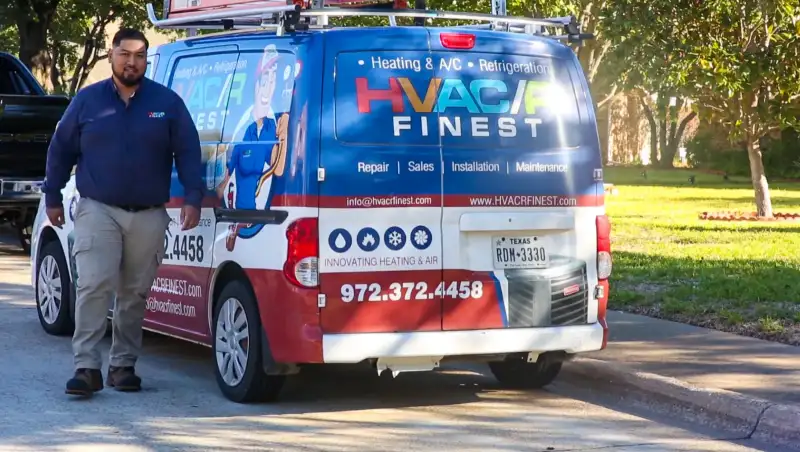
Company vehicles used for this work must show the company name and license number on both sides, in letters at least two inches high. An invoice is required for all air conditioning and refrigeration work. Proposals and invoices must show the company name, address, phone number and license number, plus a notice that the work is regulated by TDLR with the agency's contact details. TDLR's penalty schedule lists a missing license number in an ad as a violation.
Registered technicians vs licensed contractors
Under Texas law, an air conditioning and refrigeration technician assists a licensed contractor. Technicians must be registered or certified with TDLR, and they work under the supervision of a licensed contractor. A technician cannot run their own contracting business on a registration alone.
A certified technician has gone further. To qualify, a person must be at least 18, complete a certification training program or 24 months of supervised work, and pass a competency exam. Separately, anyone who handles refrigerant must hold an EPA Section 608 certification, and the EPA says homeowners can ask a technician to show their card.
Red flags to watch for
Most contractors follow the rules. These signs mean you should stop and verify before you sign anything.
- No license number on the ad, truck, quote or invoice
- The license name does not match the company on your quote
- The license does not show up in the active license search
- Only a technician registration, with no contractor license behind it
- No TDLR notice on the proposal or invoice
- They will not share insurance details when you ask
- They want to skip a permit your city requires
- They handle refrigerant but cannot show an EPA 608 card
What to do if something seems wrong
If a contractor will not give you a license number, or the number does not check out, it is fine to walk away and get another quote. If you already hired someone and have concerns, TDLR takes complaints through its Complaints and Enforcement page. Include the license number, company name, address, invoices and photos.
When you are ready for work on your system, a few minutes of checking up front is worth it. Whether you need AC repair or a new system installed, ask for the license number first and confirm it on the TDLR search.
More HVAC Guides
Plain answers to common heating and cooling questions from the HVAC-R Finest team.
Frequently Asked Questions
Do HVAC contractors need a license in Texas?
Yes. Anyone who designs, installs, repairs, maintains or services air conditioning or refrigeration equipment for the public, or offers to, needs a TDLR air conditioning and refrigeration contractor license.
What does TACL mean in a Texas HVAC license number?
TDLR's search help lists TACL as the license type code for an Air Conditioning Contractor. When you search by number, enter only the digits.
What is the difference between a Class A and Class B HVAC license?
A Class A license covers equipment of any size. A Class B license covers equipment up to 25 tons of cooling or 1.5 million BTUs per hour of heating, which includes most homes.
Can a registered technician work on my AC without a contractor?
No. In Texas, registered and certified technicians assist a licensed contractor and must work under that contractor's supervision.
Why can't I find a contractor in the TDLR search?
The search shows active licenses only, and an exact name match is the default. Try part of the name or the license digits, or call TDLR at 800-803-9202.
Need a licensed HVAC contractor?
Call HVAC-R Finest at (972) 372-4458 or request service online for licensed heating and cooling help in Dallas and nearby cities.