
How to Prepare Your Heat Pump and Furnace for a Texas Freeze
Dallas winters are mild most years, so a heating system can sit idle for months and then be asked to run nonstop when an Arctic front arrives. A little prep before the freeze, and a few simple rules during it, can help keep your home warm and safe.
By the HVAC-R Finest team. Updated November 18, 2026.
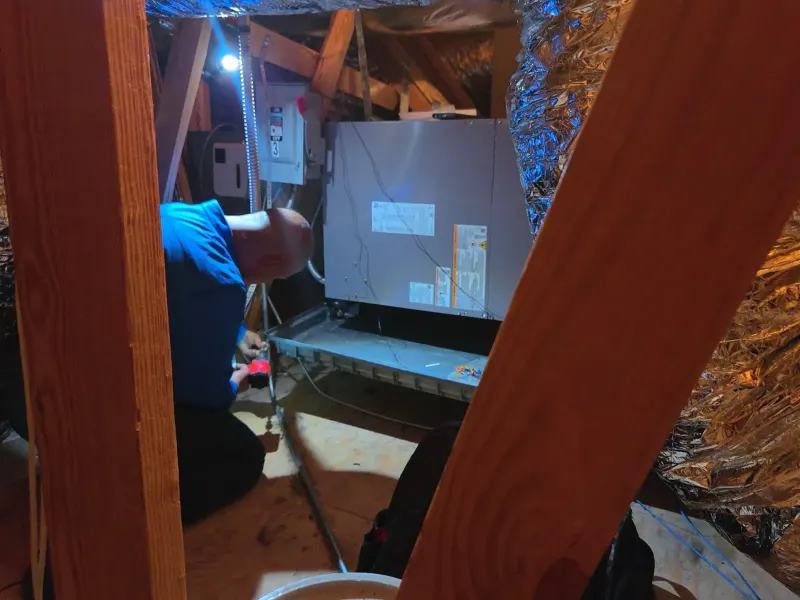
Why a hard freeze catches North Texas heating systems off guard
In North Texas, cooling season is long and heating season is short. A furnace or heat pump can go months with almost no heating work. Dust settles, the filter gets forgotten, and small problems stay hidden until the first night the system has to run for hours.
February 2021 showed how hard that test can be. During Winter Storm Uri, the National Weather Service recorded a low of minus 2 degrees at DFW Airport on February 16, and the airport stayed at or below freezing for 139 hours in a row. Federal regulators called the power cuts that week the largest firm load shed event in U.S. history.
Before the freeze: a heating checklist you can do yourself
Do these a few days ahead, while there is still time to schedule a repair. None of them need tools.
- Run the heat through a full cycle. A dusty smell at first is common.
- Replace a dirty air filter and keep a spare.
- Clear leaves and stored items away from the outdoor unit.
- Move furniture, rugs and drapes off vents and returns.
- Put fresh batteries in the thermostat if it uses them.
- Test your carbon monoxide and smoke alarms.
- Find the furnace power switch and the breaker panel.
- Know where your furnace vent pipes exit the house.
Heat pumps in freezing weather: what is normal
A heat pump keeps heating when it is below freezing outside. It just runs longer. Many people worry about a heat pump freezing up in winter when what they see is normal. Lennox says a light layer of frost on the outdoor coil is completely normal in cold, humid weather.
To clear the frost, the system runs a defrost cycle. Trane notes that the outdoor fan may stop and you may see a cloud of steam. Heating resumes within a few minutes.
You may also see AUX on the thermostat. That is auxiliary heat, a backup that comes on automatically on very cold days, during defrost or after a big thermostat change. It is not the manual EM setting. See our guide to what emergency heat means.
Avoid big thermostat setbacks during a freeze. The U.S. Department of Energy says not to set a heat pump thermostat back if that brings on backup electric resistance heat, which costs more to run. Trane adds that raising the setting more than 3 or 4 degrees at once can trigger AUX heat. Pick a temperature and leave it there.
Should you cover your heat pump in winter?
No, not while it is heating your home. A heat pump moves outdoor air across its coil all winter, and a cover blocks that airflow. Lennox says heat pumps that run year-round should never be covered, and Trane warns against solid covers.
Keeping the unit clear matters more. Trane says snow or ice that restricts airflow makes a heat pump strain to keep up. Brush light snow off the top with a broom, clear leaves from the sides, and make sure gutters do not drain onto the unit.
After freezing rain, do not chip at ice with tools or pour hot water on the unit. Lennox warns that both can cause damage. Let the defrost cycle work. If thick ice stays or the unit refreezes quickly, call for heat pump service.
Gas furnaces: what goes wrong after a long idle season
Most gas furnace trouble in a freeze shows up at startup. An ignitor lights the burners, and a flame sensor confirms the flame. Carrier says a dirty or faulty flame sensor is one of the most common reasons a furnace starts and then shuts off after a few seconds. A failed ignitor can keep the burners from lighting at all. Both are jobs for a technician.
A high-efficiency (condensing) furnace uses plastic intake and exhaust pipes that run outdoors. Keep both clear of ice, snow and nests. Trane warns that a blocked exhaust pipe can let deadly carbon monoxide build up in the home.
These furnaces also drain water through a condensate line. Bryant notes that the line can freeze where it is exposed to low temperatures outside, and water can then back up and leak. Never thaw it with an open flame. If you see water around the furnace, call for heating repair.
Safety rules during a freeze or power outage
These rules come from the CDC, Ready.gov, the Consumer Product Safety Commission and the National Fire Protection Association.
No ovens, grills or indoor generators
Never heat your home with a gas oven or stovetop, and never burn charcoal indoors. Run a generator outside only, at least 20 feet from windows, doors and attached garages.
Give space heaters three feet
Keep anything that can burn at least three feet away. Plug the heater straight into a wall outlet, and turn it off when you leave the room or go to bed.
Keep carbon monoxide alarms working
Put battery-powered or battery-backup alarms on every level and outside sleeping areas. If you suspect carbon monoxide, get outside to fresh air and call 911.
If you smell gas, leave first
Get everyone out. From a safe distance, call 911 and your gas utility. Atmos Energy, the gas utility for Dallas and many nearby cities, lists its 24-hour emergency line as 866-322-8667.
Heat pump or furnace not working in cold weather? Check these first
If the heat quits during a freeze, start simple. Make sure the thermostat is set to Heat, the setting is above room temperature and the batteries are good. Check the breaker panel. If a breaker has tripped, reset it once. If it trips again, leave it off.
Next, make sure the power switch near the furnace or air handler is on. It looks like a light switch. Replace a clogged filter, since Carrier notes it can cause overheating and an automatic shutdown. Check that the heat pump outdoor unit and the furnace vent pipes are not blocked by ice or debris.
If the heat is still out, stop there and call (972) 372-4458. HVAC-R Finest repairs gas furnaces, electric furnaces and heat pumps for homes and businesses, and offers 24/7 emergency HVAC repair. For repairs, you approve the quote before any work starts.
When to book a heating tune-up and what it covers
The best time is fall, before the first cold snap. ENERGY STAR recommends a heating check-up in the fall, and the CDC advises having your heating system serviced every year.
A heating tune-up from HVAC-R Finest includes checking the heat exchanger and venting, testing safety controls, checking the blower and airflow, checking heat pump operation and defrost, and testing the thermostat and system operation. See our HVAC maintenance page for details.
If an older furnace struggles every winter, a tune-up may not be enough. Quotes for replacement are free. See furnace installation.
More HVAC Guides
Plain answers to common heating and cooling questions from the HVAC-R Finest team.
Frequently Asked Questions
Should I cover my heat pump in winter?
No. A heat pump needs open airflow all winter, and Lennox says heat pumps that run year-round should never be covered. Keep it clear of leaves, snow and ice instead.
Is frost on my heat pump normal in freezing weather?
Yes. Light frost is normal, and the defrost cycle melts it. Heavy ice that stays on the unit or returns quickly needs a technician.
What should I set my thermostat to during a freeze?
Pick a comfortable setting and hold it steady. With a heat pump, large setbacks and big jumps can bring on backup heat, which costs more to run.
Will my gas furnace work if the power goes out?
In most homes, no. Trane notes that a gas furnace still needs electricity for the blower, ignition and control board. Never use an oven or grill as a substitute.
Is a burning smell normal the first time I turn on the heat?
Usually. Carrier says dust on furnace parts burns off, and the smell can last from about 30 minutes to a few hours. If it smells like burning plastic, shut the system off and call for service.
Heat Out During a Freeze?
Call (972) 372-4458 for furnace and heat pump repair in Dallas and nearby cities, with 24/7 emergency HVAC services.